Prejudice
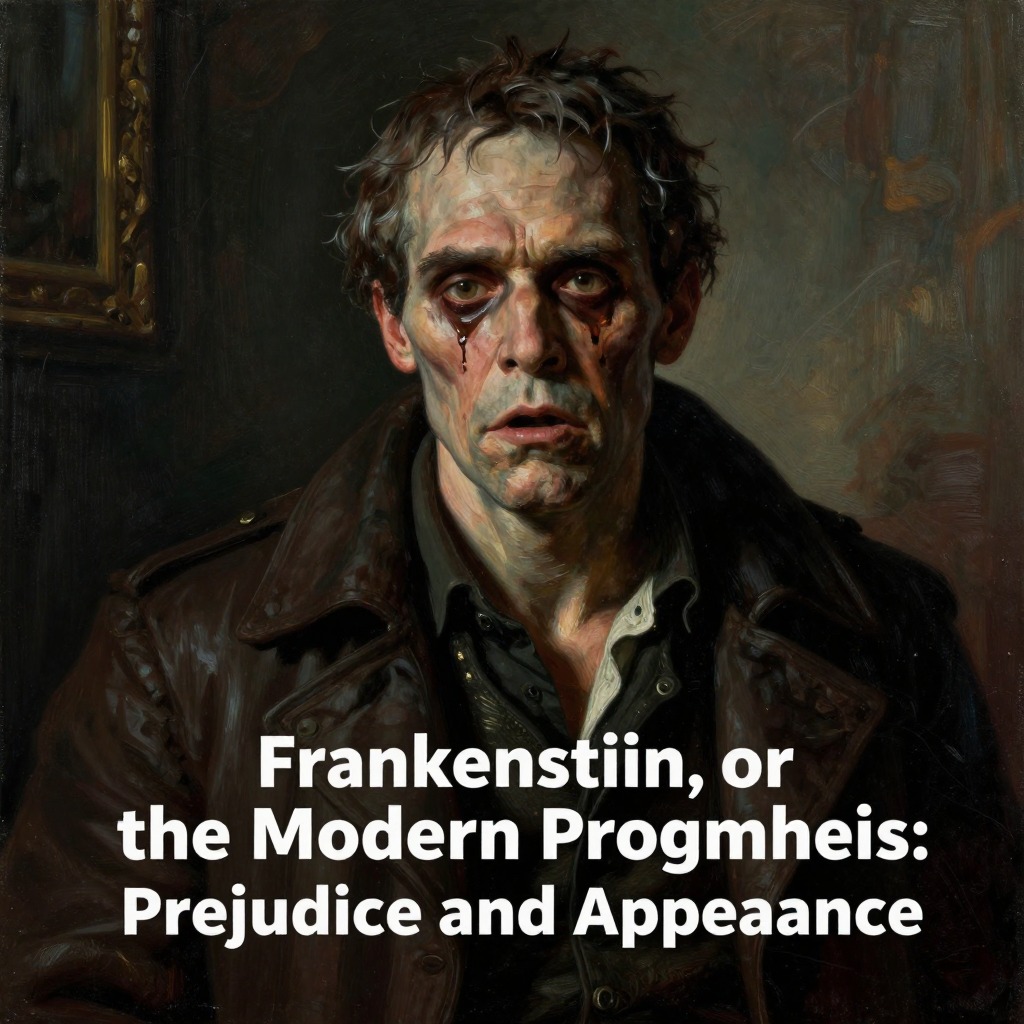
Prejudice, the reflexive judgment of others based on appearance rather than character, operates as the central engine of tragedy in Mary Shelley's Frankenstein. The monster's entire descent into vengeful violence is precipitated by the instantaneous, visceral horror his appearance provokes in every human being he encounters, a pattern of rejection that forecloses every attempt he makes at companionship and moral development. This systematic prejudice, which the monster himself comes to internalize and articulate, transforms a being initially capable of benevolence into the very monster others assume him to be, making the novel a profound critique of how social condemnation can create the evil it purports to discover.
The Creature's First Encounters with Prejudice
From the moment of his awakening, the monster is defined by the reaction his form elicits. Victor Frankenstein, his creator, is the first to recoil: upon seeing the creature's dull yellow eye open and its limbs convulse, Victor's "breathless horror and disgust" fill his heart, and he rushes from the room, unable to endure the aspect of the being he had labored to form. This immediate abandonment sets the pattern. When the monster later ventures into a village, the inhabitants respond with terror and violence: children shriek, a woman faints, and the whole village attacks him with stones and other missile weapons, forcing him to flee grievously bruised. These early experiences teach the creature that his physical form is an insurmountable barrier to human acceptance, a lesson reinforced when he attempts to befriend the De Lacey family.
The De Lacey Episode: Hope and Its Destruction
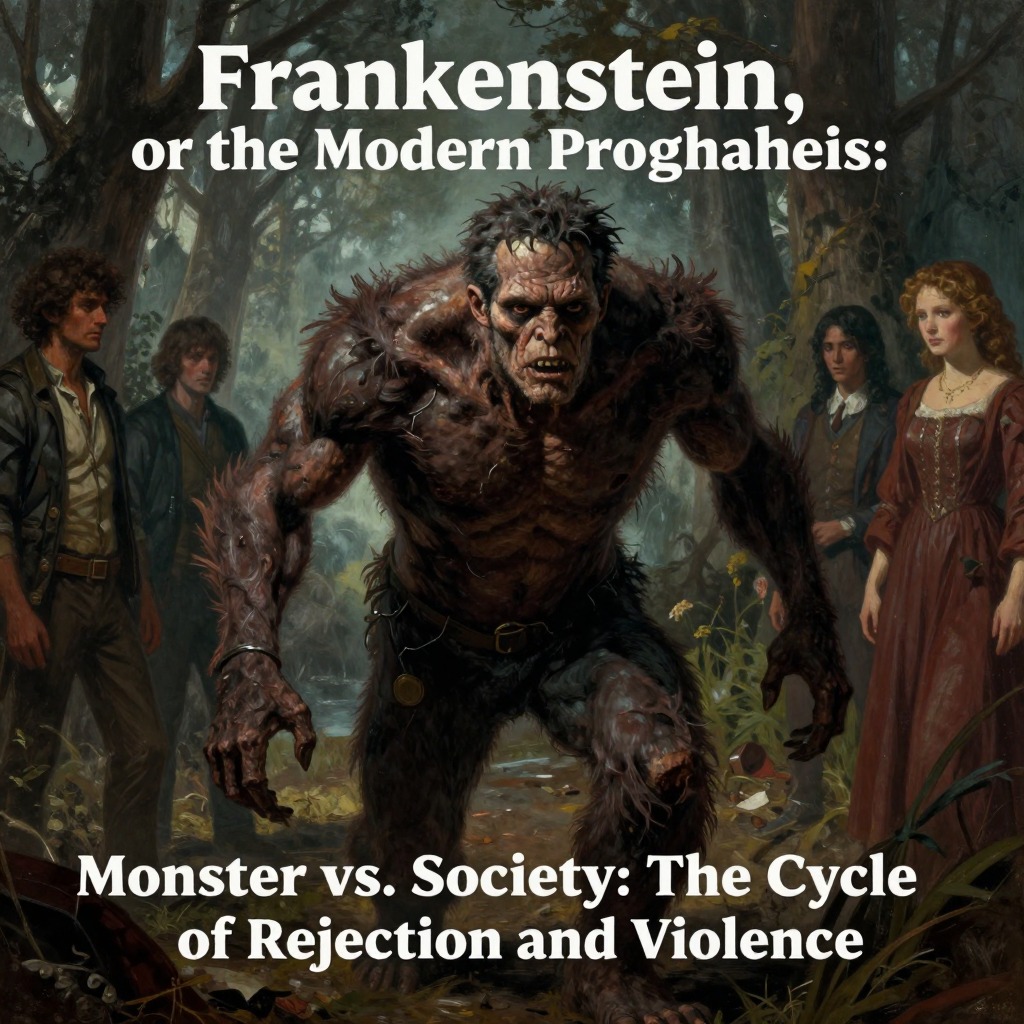
The monster's most sustained attempt to overcome prejudice occurs during his secret observation of the De Lacey family. He learns their language, performs anonymous acts of kindness by gathering wood, and develops a deep admiration for their virtues. Believing that the blind old man, De Lacey, might judge him by his words rather than his appearance, the creature seizes an opportunity to speak with him alone. He confesses to De Lacey that he is an "unfortunate and deserted creature" who fears that "a fatal prejudice clouds their eyes, and where they ought to see a feeling and kind friend, they behold only a detestable monster." De Lacey, unable to see him, responds with compassion, offering to help. But the moment Felix, Agatha, and Safie return and behold the monster, their reaction is instantaneous and devastating: Agatha faints, Safie rushes out, and Felix tears the creature from his father's knees and strikes him violently with a stick. The monster, who could have torn Felix "limb from limb, as the lion rends the antelope," refrains, overcome by pain and anguish, and flees. This rejection, despite his careful preparation and the old man's goodwill, confirms that his appearance renders him irredeemable in the eyes of those he loves.
The Internalization of Prejudice and the Turn to Vengeance
The cumulative effect of this systematic rejection is the monster's internalization of the prejudice directed at him. He comes to see himself through the eyes of his persecutors, declaring, "I am malicious because I am miserable. Am I not shunned and hated by all mankind?" He recognizes the injustice of his situation, asking Victor, "Yet you, my creator, detest and spurn me, thy creature, to whom thou art bound by ties only dissoluble by the annihilation of one of us." The monster's plea for a female companion is framed as the only possible escape from this prejudice: "My companion must be of the same species and have the same defects. This being you must create." He argues that with a partner as hideous as himself, he could quit the neighborhood of man and live a harmless life. When Victor destroys the unfinished female creature, the monster's final hope for companionship is extinguished, and he declares an everlasting war, vowing, "I will be with you on your wedding-night." His subsequent murders of Henry Clerval and Elizabeth Lavenza are the direct consequence of a world that refused to see past his exterior.
Victor's Complicity and the Cycle of Judgment
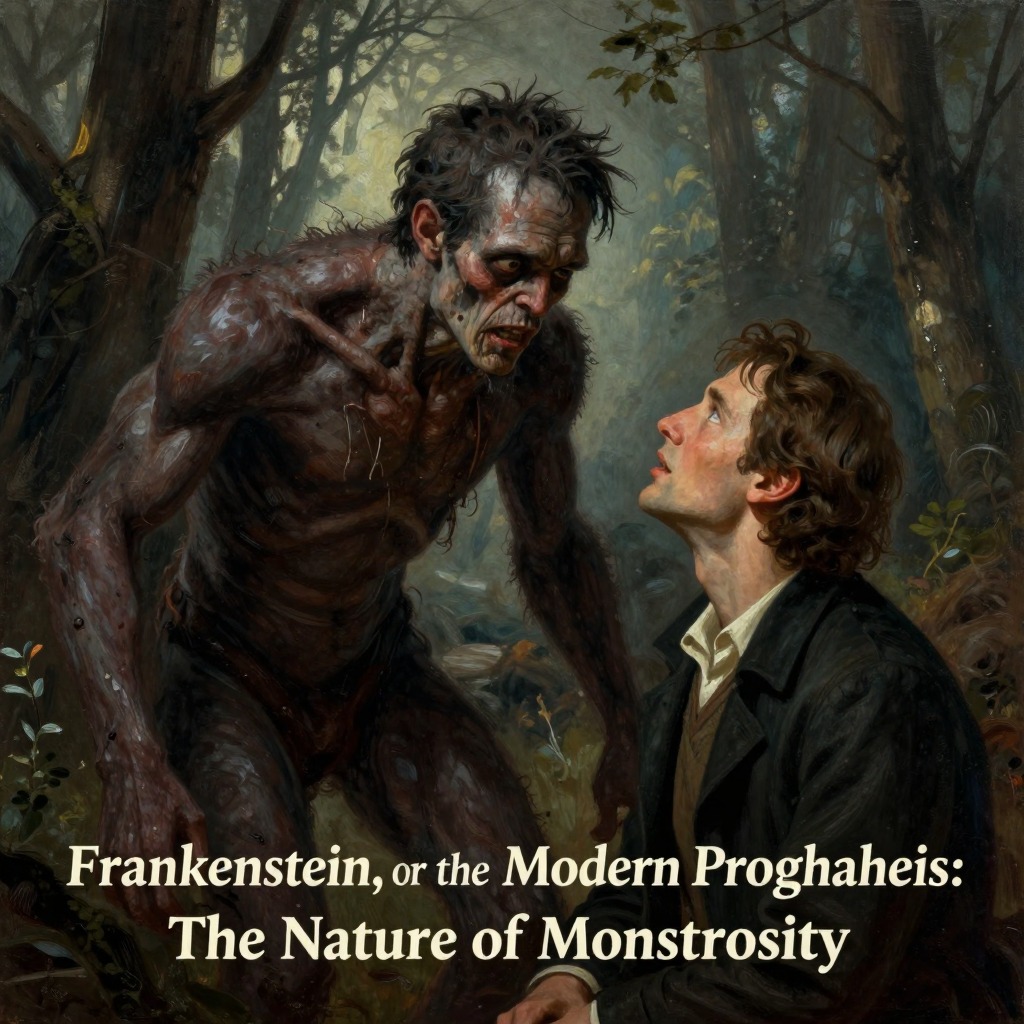
Victor Frankenstein is not merely the victim of the monster's revenge but an active participant in the prejudice that creates it. His initial horror at the creature's appearance, before the monster has committed any wrong, establishes the moral framework of the novel: the creator judges his creation by its form alone. Victor's refusal to hear the monster's tale on the glacier is initially based on this same revulsion, and even after listening, he cannot overcome his visceral disgust. The monster explicitly names this dynamic, telling Victor, "You, my creator, would tear me to pieces and triumph." Victor's own guilt is compounded by his silence; he allows Justine Moritz to be executed for a murder he knows the monster committed, because he fears that his tale of a supernatural being would be dismissed as madness. This failure to speak, born of a fear of being judged insane, perpetuates the cycle of injustice that the monster's appearance has set in motion.
Thematic Significance: Prejudice as a Self-Fulfilling Prophecy
Frankenstein presents prejudice not as a simple moral failing but as a structural force that shapes identity and destiny. The monster begins his life with benevolent intentions, yet every human he encounters—from the shepherd who flees his hut to the rustic who shoots him after he rescues a drowning girl—responds to him with fear and violence. The novel demonstrates that prejudice is a self-fulfilling prophecy: by treating the monster as a demon, society ensures that he becomes one. In his final speech to Walton, the monster reflects on this tragic transformation, lamenting that he was "nourished with high thoughts of honour and devotion" but that "crime has degraded me beneath the meanest animal." He asks, "Am I to be thought the only criminal, when all humankind sinned against me?" This question, unanswered by the novel, indicts not only the individual characters who reject the monster but the entire social order that judges by appearance. The monster's ultimate decision to immolate himself on a funeral pyre is the final, terrible consequence of a prejudice that allowed no place for him among the living.